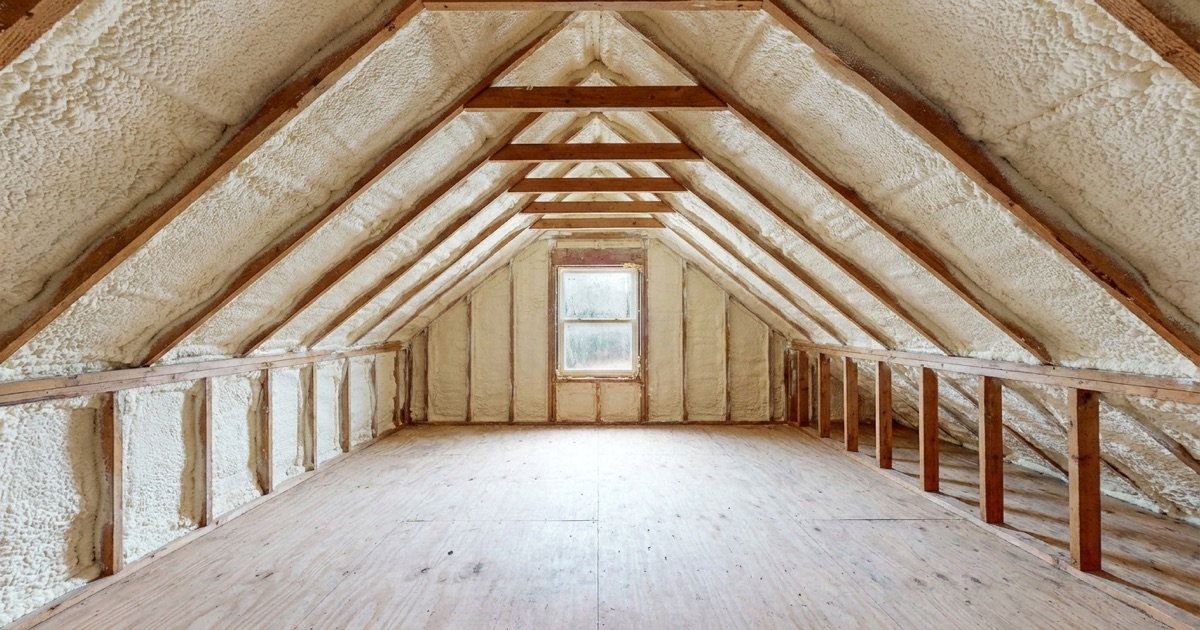
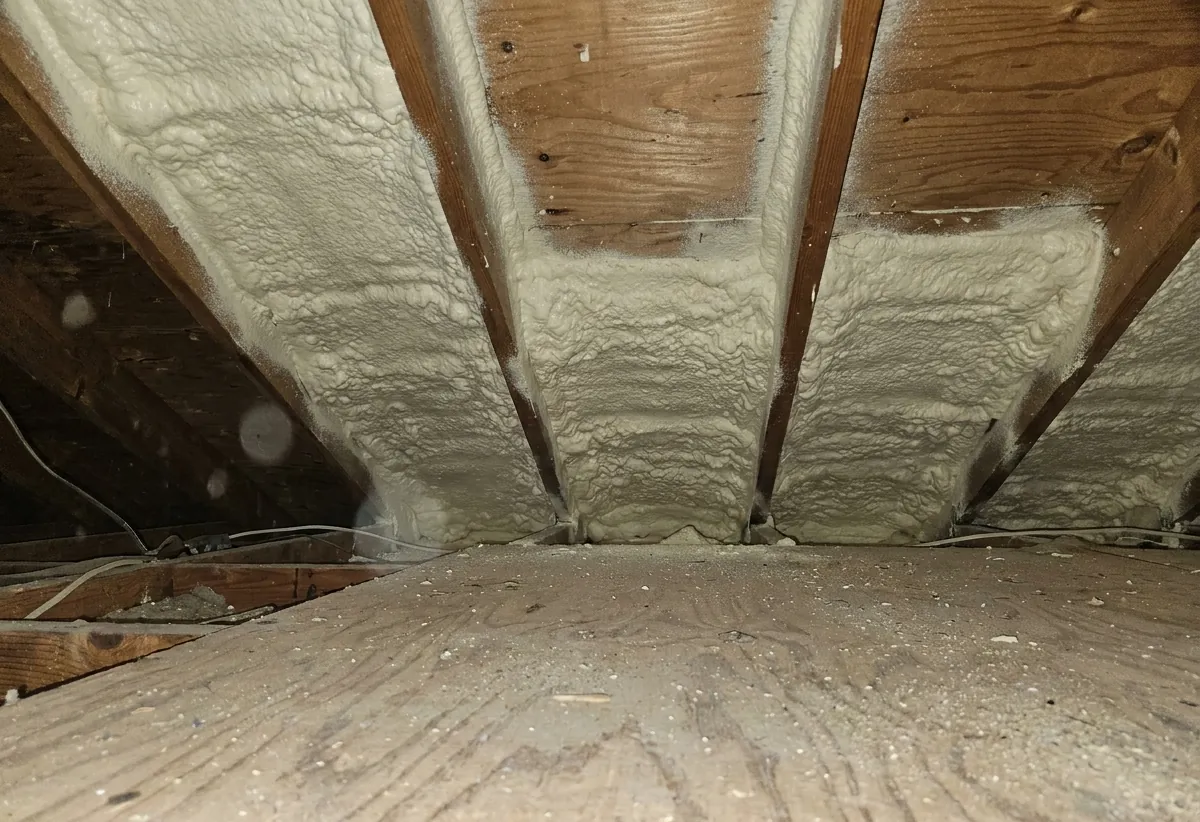
Airtight sealing
Foam expands into gaps, cracks, and odd cavities that fiberglass can't fill, stopping the drafts that drive up your bills and make rooms uncomfortable.
We install open-cell and closed-cell spray foam that air-seals your home or building from the attic to the crawl space — so it holds heat through Wisconsin winters, stays cooler in summer, and feels comfortable in every room. Get a straight, written estimate for free.
If your house is hard to heat in January, sticky upstairs in July, or your energy bills keep climbing, the problem usually isn't your furnace — it's air leaking through gaps in the building envelope. Spray foam insulation fixes that at the source. As spray foam insulation contractors serving Eau Claire and the surrounding Chippewa Valley, we install professional-grade open-cell and closed-cell foam that expands to seal and insulate in one step, locking conditioned air inside where it belongs.
We work on homes and buildings of every age — from drafty older houses near downtown Eau Claire to new construction, additions, garages, shops, and pole barns out in the country. Every job starts the same way: we come out, assess where you're actually losing energy, walk through your options, and hand you a clear written estimate with no pressure and no obligation. Whether you need an attic sealed, a cold crawl space tightened up, or a whole building insulated, we make spray foam straightforward — and we build it to perform through Wisconsin's freeze-thaw winters and humid summers.
Traditional batts only slow heat transfer. Spray foam insulates and air-seals at the same time — which is why it's so effective in a cold climate like ours.
Foam expands into gaps, cracks, and odd cavities that fiberglass can't fill, stopping the drafts that drive up your bills and make rooms uncomfortable.
Closed-cell foam reaches roughly R-6 to R-7 per inch, so you get strong, consistent thermal performance even where wall and roof cavities are shallow.
A tighter envelope means your furnace and AC cycle less to hold temperature, trimming the energy you spend heating and cooling all year.
By cutting the airflow that carries humidity into cold cavities, foam — especially closed-cell — helps guard against condensation and damp spots.
No more cold floors over the crawl space or a bonus room you can't keep warm — sealing the envelope evens out temperatures from room to room.
Cured foam doesn't sag, settle, or compress like some batts and loose-fill, so the air seal and R-value hold up for the life of the structure.
From a single problem area to a whole building, we match the right foam to each space. Here's where spray foam makes the biggest difference for Chippewa Valley homeowners and property owners.
Your attic is where most heat escapes in winter. We air-seal and insulate at the roof deck or the attic floor to stop that loss, keep ice dams in check, and make upstairs rooms livable. Attic insulation is one of the highest-impact upgrades for an Eau Claire home.
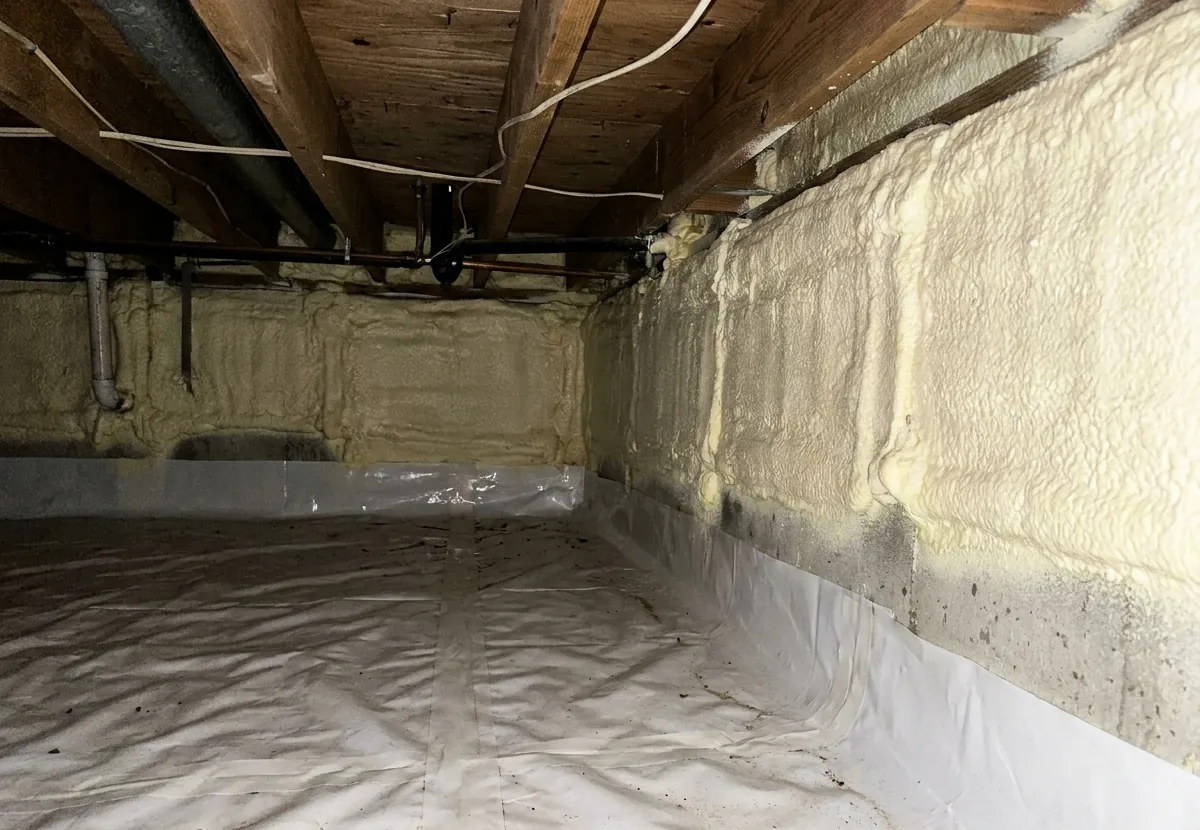
Cold floors and musty smells usually start below grade. Sealing crawl space walls and rim areas with foam keeps the cold and damp out, helps control humidity, and stops the "stack effect" that pulls basement air up into your living space.
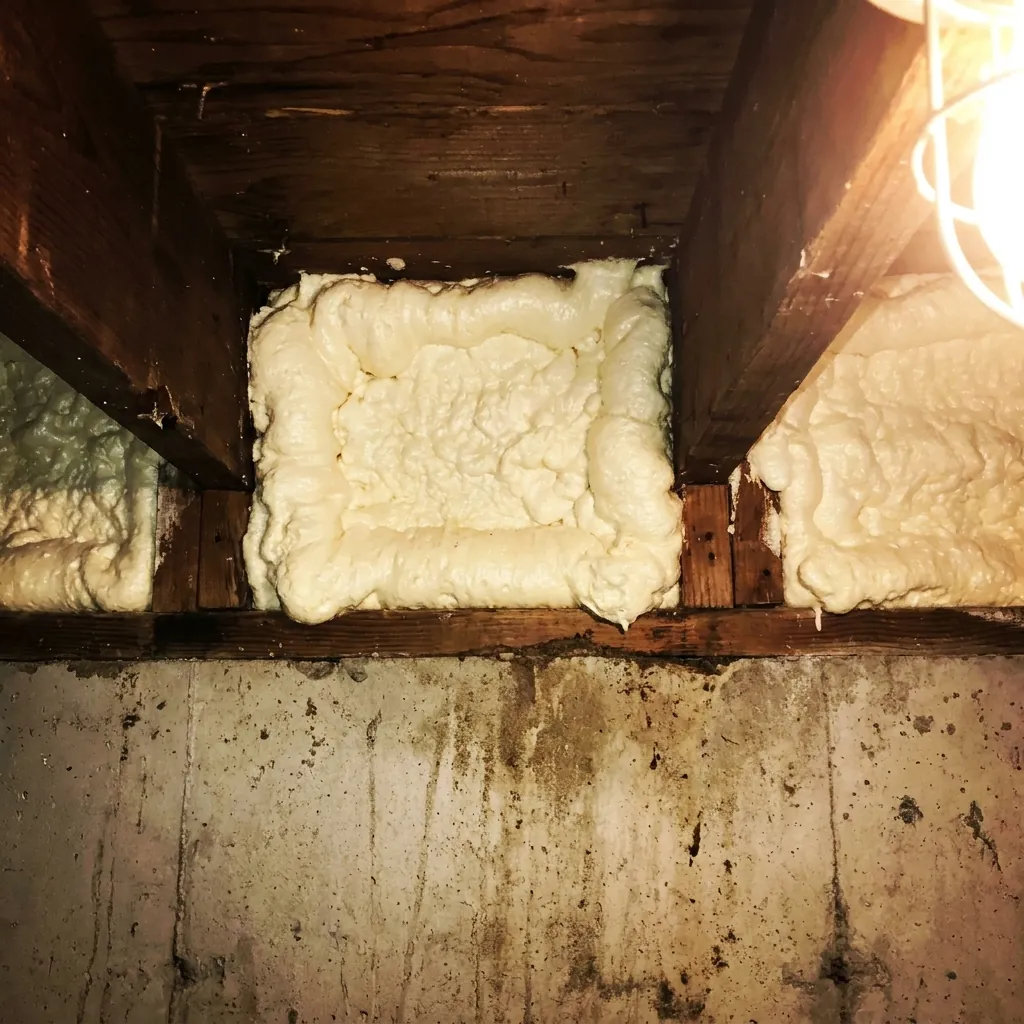
The rim joist — where your floor framing meets the foundation — is a notorious source of drafts and heat loss in Wisconsin homes. A few inches of closed-cell foam here delivers an outsized comfort and efficiency gain.
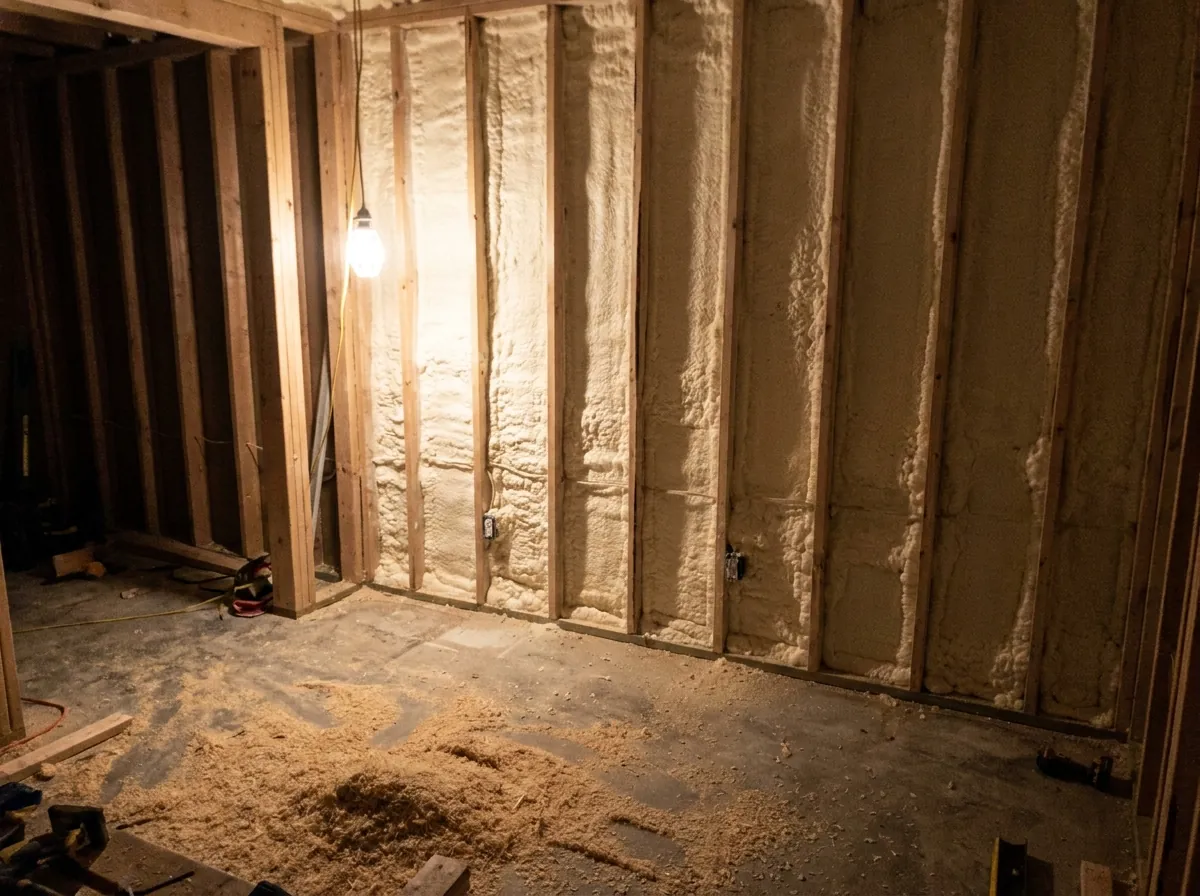
Insulating during a build or remodel lets us air-seal wall cavities completely before drywall goes up. Spray foam in the walls means a quieter, tighter, more efficient home from day one.
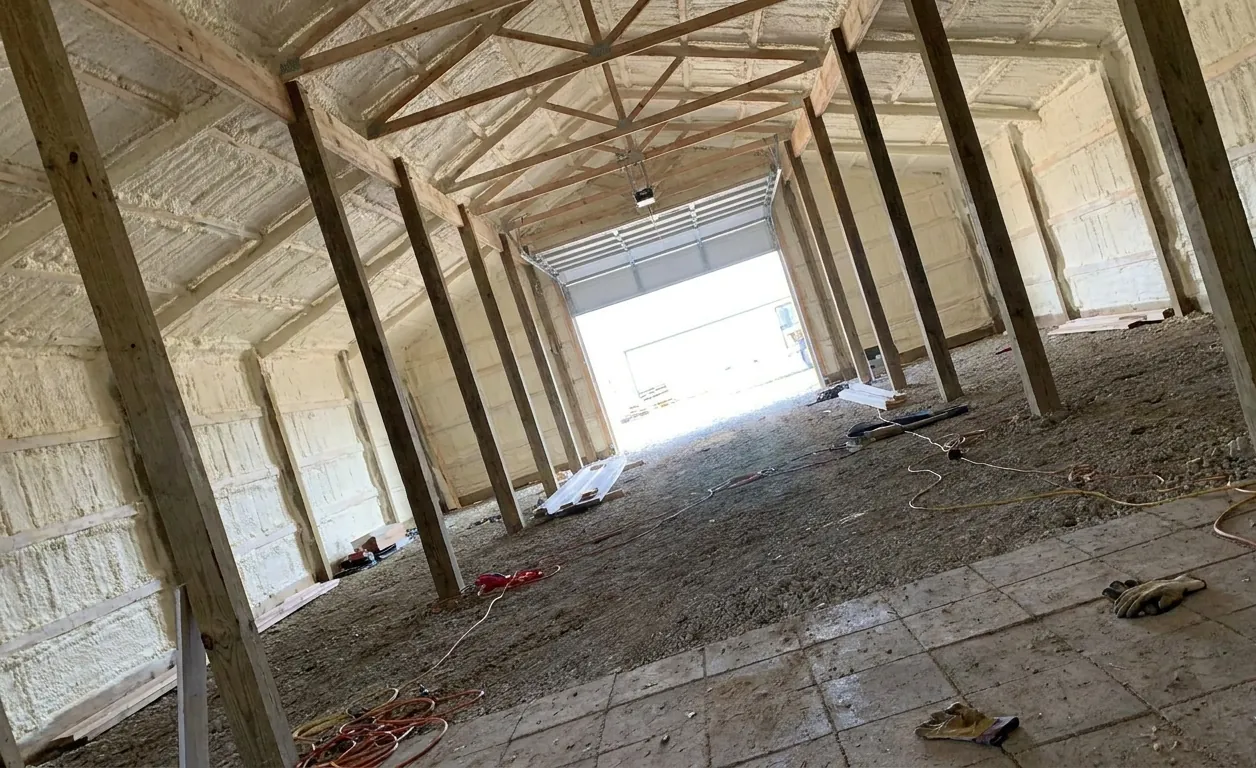
Closed-cell foam bonds directly to metal and post-frame surfaces, controlling condensation and turning a hard-to-heat pole barn, shop, or steel building into a usable, comfortable space year-round.
Want to actually use the garage or workshop in January? Foam-insulating the walls and ceiling holds heat far better than batts, so a small heater can keep the space comfortable while you work.
Not sure which area is costing you the most? That's what a free assessment is for — we'll point you to the upgrades with the biggest payback first.
Both seal air and insulate — they just do it differently. Most projects use one or the other depending on the space, and we'll recommend the right fit when we assess your home.
On a lot of homes we use both: closed-cell where moisture and tight spaces demand it, open-cell where you mainly need air sealing and R-value at a lower cost. The goal is the best result for your budget — not a one-size-fits-all spray.
It's the first question almost everyone asks — and the honest answer is that spray foam insulation cost depends on your specific project. Anyone who quotes a flat per-square-foot number sight-unseen is guessing. A few things actually move the price:
Rather than throw out a number that may not hold up, we measure the space, talk through whether open-cell or closed-cell makes sense, and give you a clear written estimate — free, with no obligation. You'll see exactly what's included before you decide anything.
Get My Free EstimateWe keep it clean, clear, and on schedule — so you know what's happening at every step.
We come out, inspect the spaces in question, and find where air and heat are actually escaping.
You get a straightforward, itemized quote with the recommended foam type and coverage — at no cost.
We mask off and protect the work area, set up ventilation, and prep surfaces for a clean install.
Our crew applies the foam in proper lifts to the right thickness, sealing the envelope as we go.
We clean up, walk the finished work with you, and make sure you're happy before we leave.
Fiberglass batts are inexpensive and they do slow heat transfer — but they don't stop air from moving through and around them. Gaps at studs, wiring, and plumbing leave paths for drafts, and over time batts can sag or get compressed, which lowers their effective R-value. In a cold climate, that air movement is where a lot of comfort and energy quietly leak away.
Spray foam insulation works differently. It expands to fill the cavity completely and bonds to the surrounding surfaces, so it insulates and air-seals in one step. That combination is why foam usually delivers tighter, more consistent results in the drafty, hard-to-seal areas of a home — and why so many Eau Claire homeowners choose it for attics, rim joists, and crawl spaces. Fiberglass still has its place on a budget; we'll give you an honest recommendation for what makes sense in each part of your project.
Looking for spray foam insulation near you? We cover Eau Claire and the surrounding communities for residential and light-commercial projects.
Don't see your town? If you're in or around the Chippewa Valley, reach out — there's a good chance we cover you.
Spray foam insulation cost depends on the square footage being covered, the foam thickness needed to reach your target R-value, whether the project calls for open-cell or closed-cell foam, and how accessible the area is. Because every home and building is different, we measure the space, talk through your goals, and put real numbers in a written estimate — which is always free.
Open-cell spray foam delivers roughly R-3.5 to R-4 per inch, while closed-cell spray foam is denser at about R-6 to R-7 per inch. That high R-value per inch is one reason spray foam performs well in tight assemblies and in Wisconsin's cold winters, where consistent thermal performance matters.
Open-cell foam is lighter, softer, and more affordable, with excellent air sealing and sound dampening — a common choice for interior walls and attics. Closed-cell foam is denser and rigid, with a higher R-value per inch and added moisture resistance, which makes it a strong fit for rim joists, crawl spaces, basements, and metal buildings. We help you choose the right one for each part of the project.
Fiberglass batts slow heat transfer but don't stop air movement on their own. Spray foam both insulates and air-seals, expanding to fill gaps, cracks, and irregular cavities that batts tend to miss. For drafty, hard-to-seal areas and cold-climate performance, spray foam typically gives you tighter, more consistent results.
For many Eau Claire homeowners, spray foam pays off through a more comfortable, draft-free home and lower heating and cooling demand. The air-sealing and high R-value per inch are especially valuable in our long heating season. Whether it's worth it for your specific space comes down to where you're losing energy now — which is exactly what a free assessment answers.
When it's installed correctly, spray foam insulation is designed to last the life of the structure. It doesn't sag, settle, or compress the way some loose-fill and batt insulation can over time, so the air seal and thermal performance hold up for decades.
Once spray foam has fully cured, it's inert and stable in the wall, attic, or floor assembly. We follow proper installation practices — correct mixing, thickness in lifts, and ventilation during the install — so the foam cures the way it's intended to before the space is reoccupied.
Yes. By sealing air leaks, spray foam reduces the warm, humid air that moves into cold cavities and condenses there. Closed-cell foam adds further moisture resistance, which is why it's often used in rim joists, crawl spaces, and basements where dampness and condensation are common concerns in Wisconsin.
Get a free, no-obligation spray foam estimate for your Eau Claire home or building. Tell us what you're dealing with and we'll take it from there.